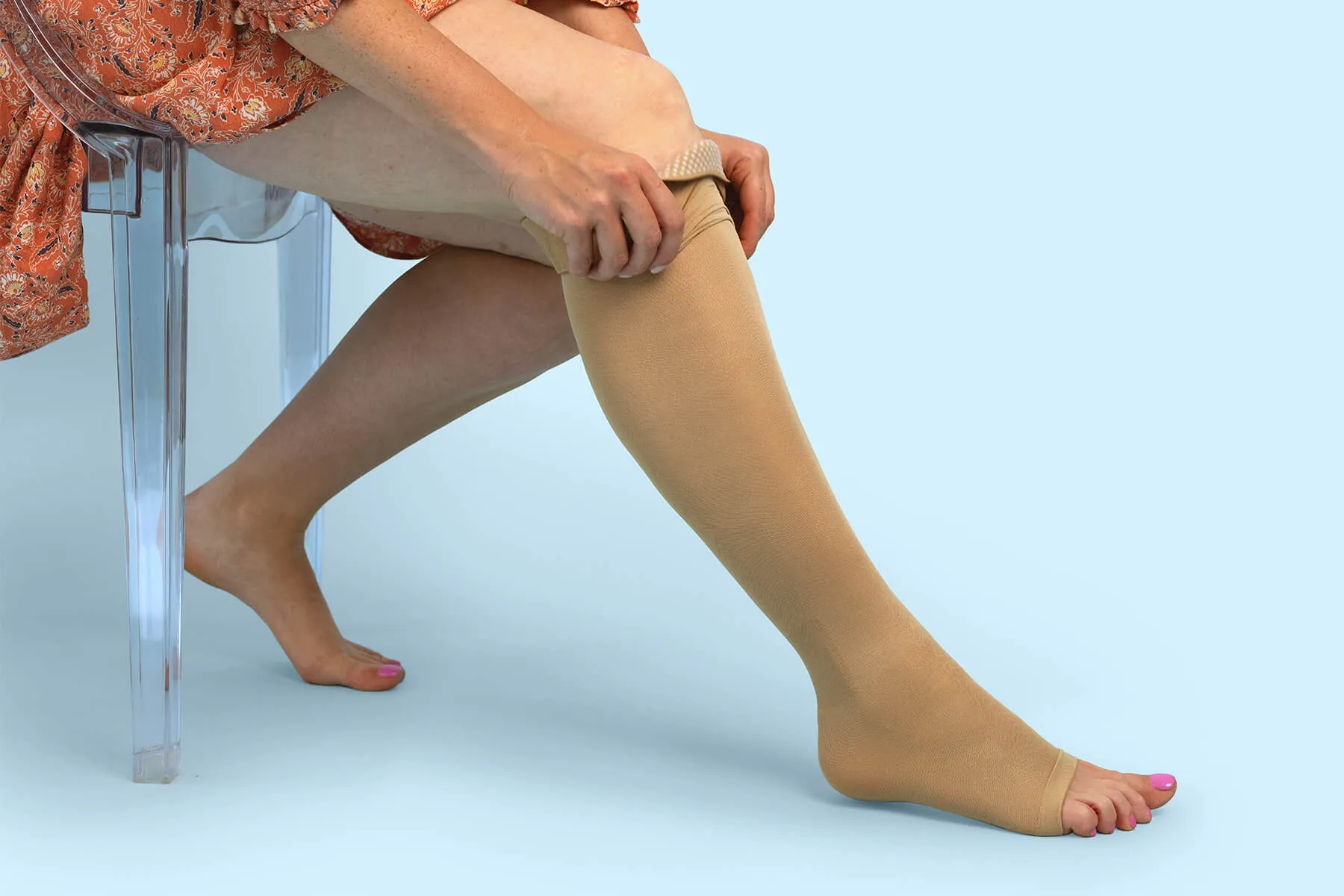
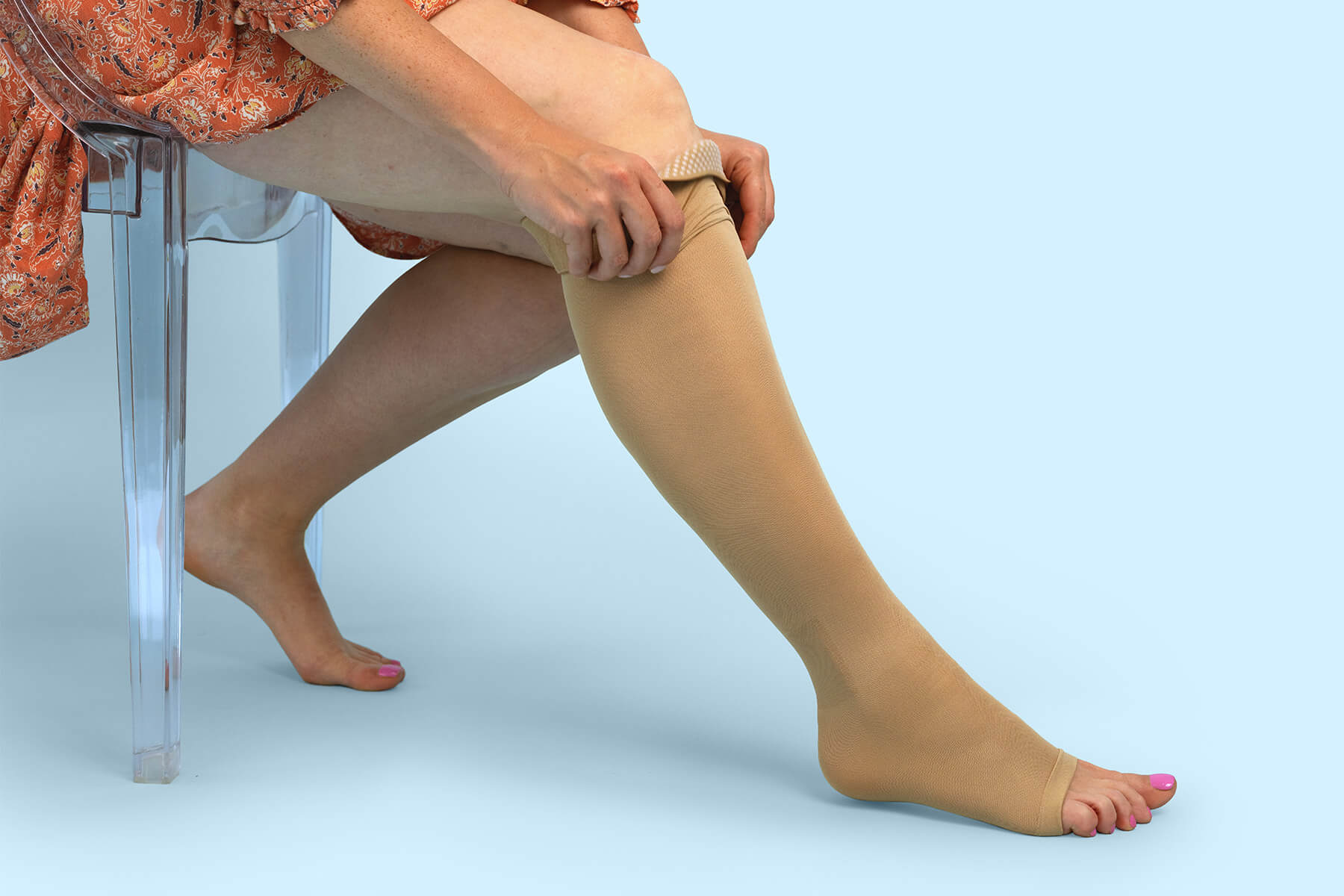
Quick Answer
Compression socks help travelers keep leg swelling down and lower the risk of blood clots on long flights and road trips. They use graduated pressure to give your veins a little extra squeeze, helping blood get back up to your heart where it belongs, even when gravity and summer heat are working against you. For most travelers, a compression level of 20–30 mmHg is the right starting point. Put them on before you leave home, keep moving throughout your trip, and wear them until you reach your destination.
Why Do Your Legs Swell During Summer Travel?
Have you ever landed after a long flight and realized your shoes feel too small? That heavy, throbbing feeling isn't just travel fatigue. It’s actually your legs reacting to the unique stressors of travel, especially when you add summer heat to the mix.
A few things are usually to blame:
Prolonged Sitting
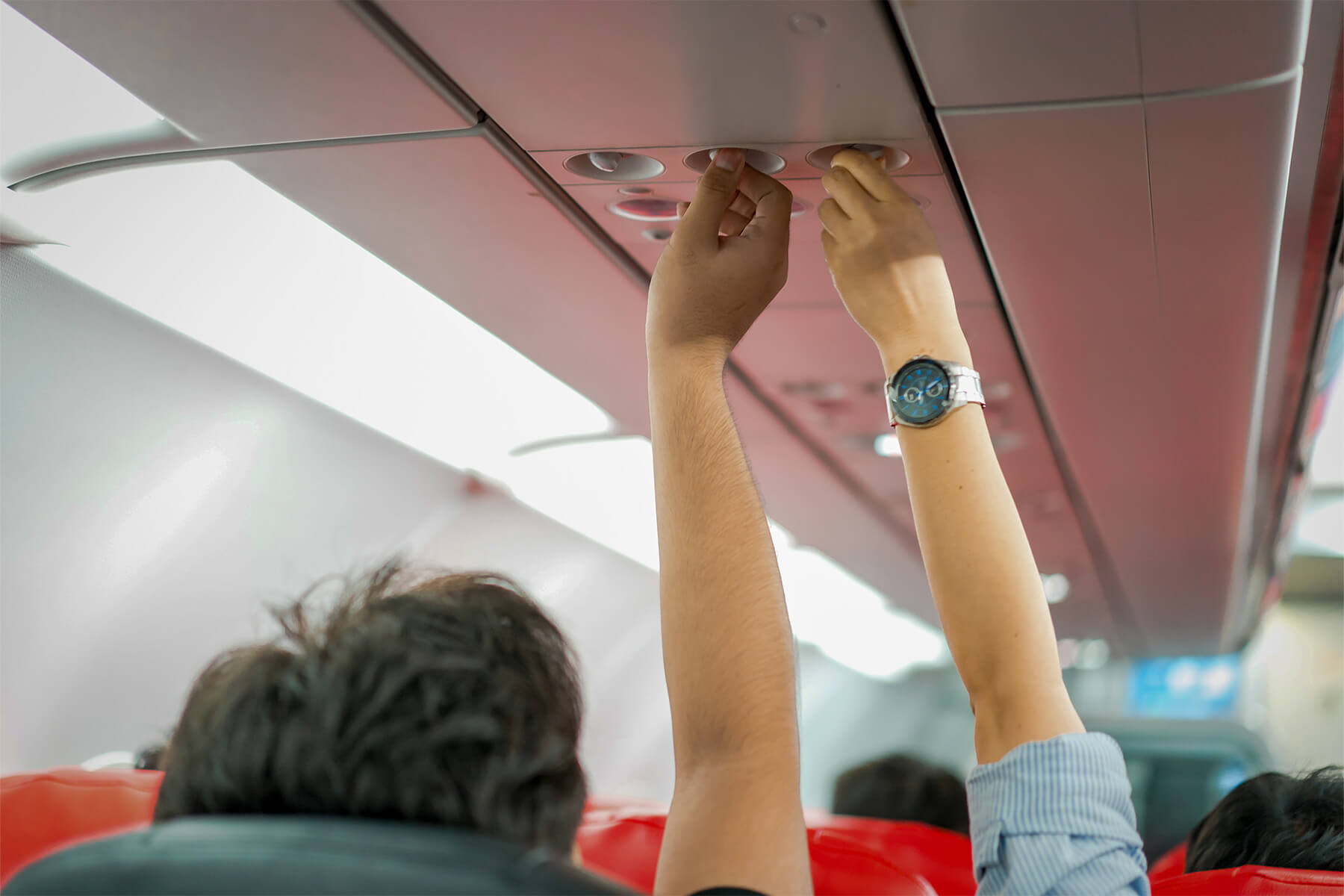
Sitting in a cramped seat or a car for hours reduces blood circulation, causing blood to pool in the lower legs.
Cabin Pressure
Airplane cabin pressure reduces oxygen intake and can impair circulation, leading to stress, dehydration, fatigue, and even blood clots.
The Heat Factor
Hot weather can cause your veins to dilate (stretch), making it easier for blood to pool in your ankles rather than circulate. This is what we call heat edema.
If you already deal with varicose veins or poor circulation, these travel-related side effects can feel even worse. At Metro Vein Centers, our vein specialists often see a spike in symptoms during travel season, but we’re here to tell you that you don't have to choose between your vacation and your vein health.
What Happens to Your Veins When You Travel
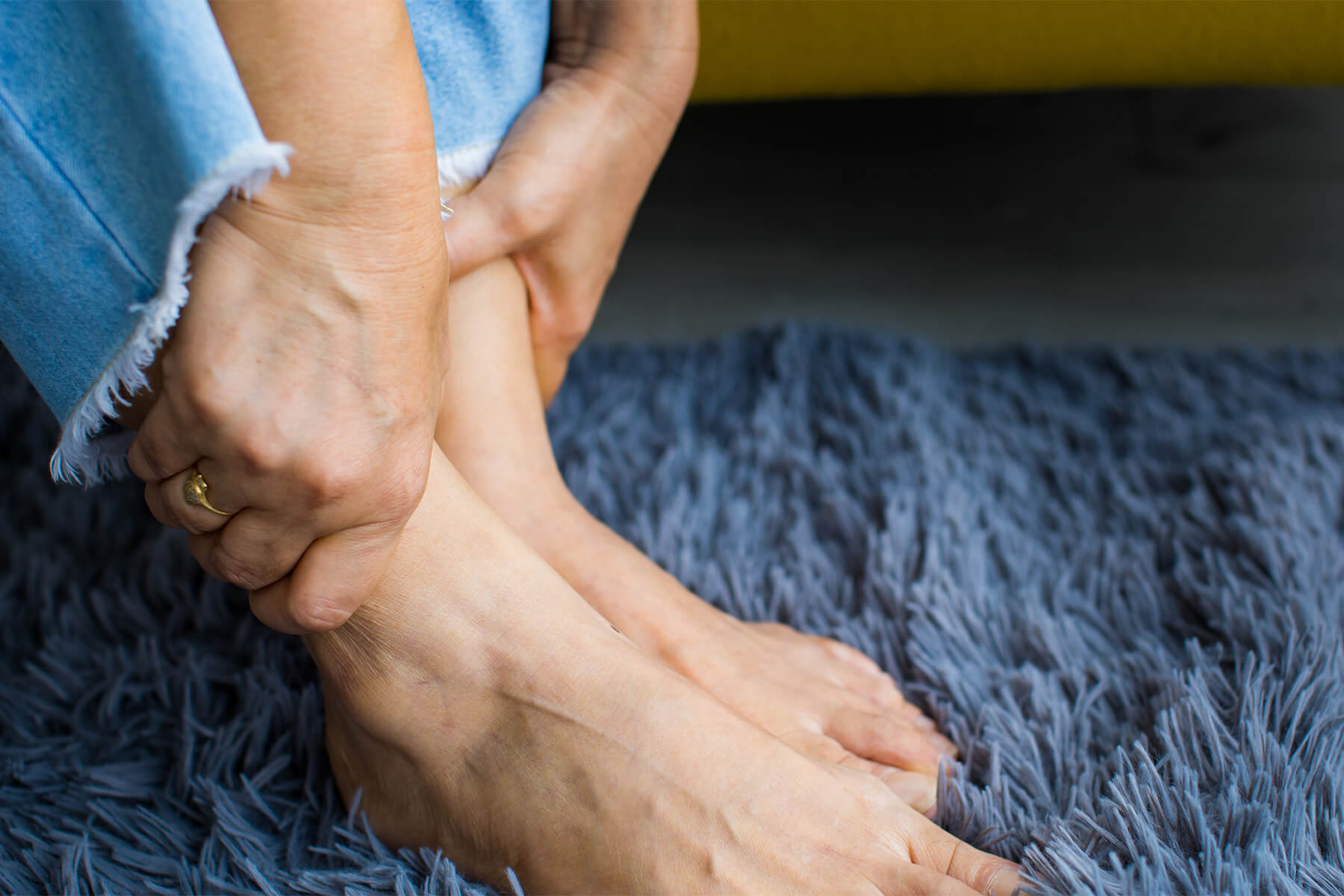
When you sit still for a long time, blood struggles to fight gravity. On flights over four hours and long car rides, blood pools in the legs, which is associated with an increased risk of Deep Vein Thrombosis (DVT), a dangerous blood clot in a deep vein.
In the summer, the challenge doubles. Whether you are managing vein health in humid climates or visiting dry-heat areas, the heat can worsen swelling, aching, and varicose vein symptoms. When it comes to preventing leg issues while traveling, compression stockings are the most recommended way to keep swelling and pain at bay.
How Do Compression Stockings Help When Traveling?
Graduated compression therapy is the gold standard for managing vein health. The goal of wearing compression stockings for flying, road trips, and other travel is to improve circulation by applying gentle pressure to your veins. This helps vein valves to pump blood back to your heart more efficiently.
Key Benefits of Compression Stockings for Travelers
Wearing compression socks for long flights and car rides can:
- Help prevent swollen ankles after flying or road trips.
- Prevent that tired feeling in your legs after standing in long airport security lines or at theme parks.
- Relieve symptoms of chronic venous insufficiency (CVI), such as aching and heaviness.
- Reduce the risk of dangerous blood clots and DVT during prolonged sitting.
Choosing the Right Compression Level
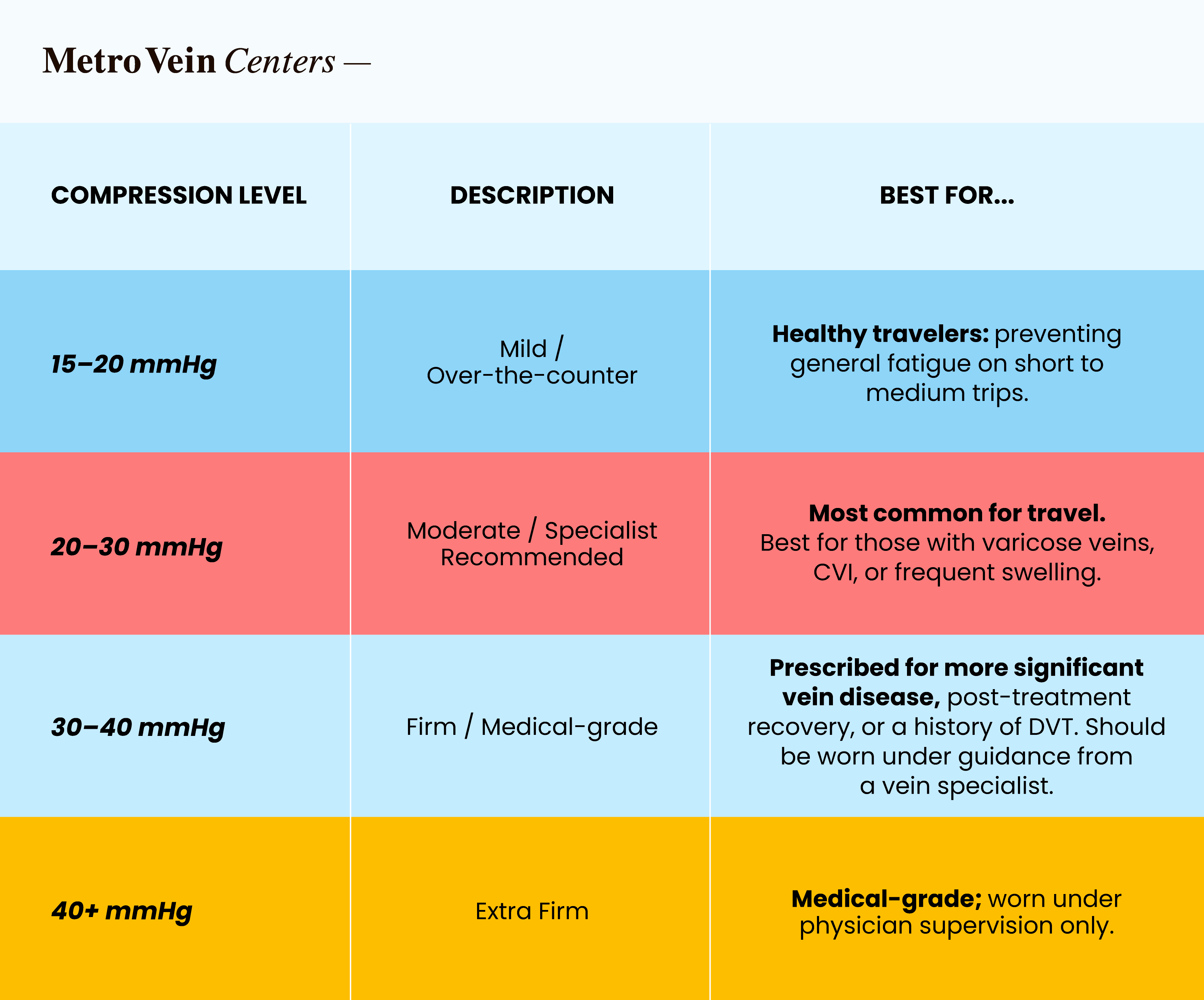
Compression is measured in mmHg (millimeters of mercury). Choosing the right level helps ensure that you get the benefits without discomfort. If you have varicose veins or your legs tend to swell during travel, 20–30 mmHg is likely the right starting point. If you are unsure, a vein evaluation can provide clear guidance.
Pro Tip: Fit matters more than shoe size. To get the right size, measure your ankle and calf circumference in the morning, when swelling is at its lowest.
When and How to Wear Compression Stockings
The goal of compression stockings is to prevent symptoms due to vein health issues. Here are some tips that our vein specialists often give to their patients before they travel.
Put Them On Before You Leave
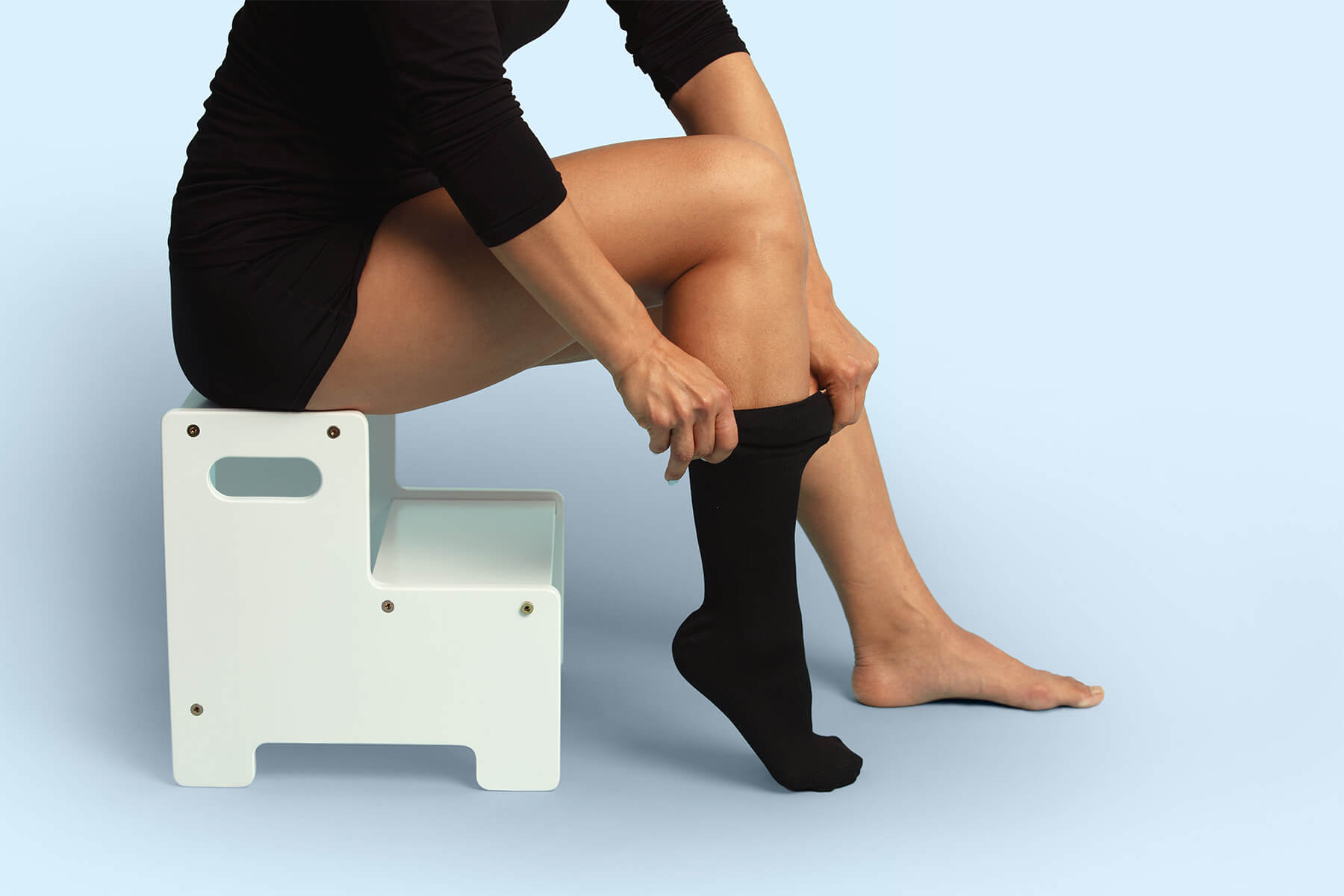
Put your stockings on in the morning before your legs have a chance to swell. Trying to pull them on mid-flight in a tiny airplane bathroom is a recipe for frustration.
Keep Moving
Compression therapy works best when your muscles are moving. Even while wearing them, try to do ankle pumps (flexing your feet up and down) every 30 minutes to jumpstart your circulation. When driving, plan a stop every two hours; even a short 5-minute walk at a rest stop can help activate the calf muscles.
Managing Summer Heat
Many people worry that compression stockings are too hot for summer. Look for breathable, moisture-wicking designs. Brands like Ames Walker compression socks are often considered the best compression socks for travel, offering lightweight options specifically engineered for warmer weather.
Care and Recovery
Once you reach your destination, take them off and elevate your legs for 15 minutes. Wash your stockings after every use to maintain their elasticity, as sweat and oils can break down the fibers over time.
Common Mistakes Travelers Make with Compression Socks
- Putting them on too late: Once swelling starts, they’re less effective
- Wearing the wrong size: Too tight can be uncomfortable; too loose won’t work
- Rolling them down: This can create a tourniquet effect
- Taking them off too early: Swelling often continues after travel
- Assuming tighter is better: Higher compression isn’t always appropriate
Who Should Talk to a Vein Specialist Before Traveling?
While mild compression is safe for most, you should schedule a consultation if you:
- Have visible, bulging varicose veins and are planning a long trip.
- Experience regular leg heaviness or aching that worsens with travel.
- Have a personal or family history of DVT or blood clots.
- Have recently undergone vein treatment.
Find a Metro Vein Centers vein clinic near you.
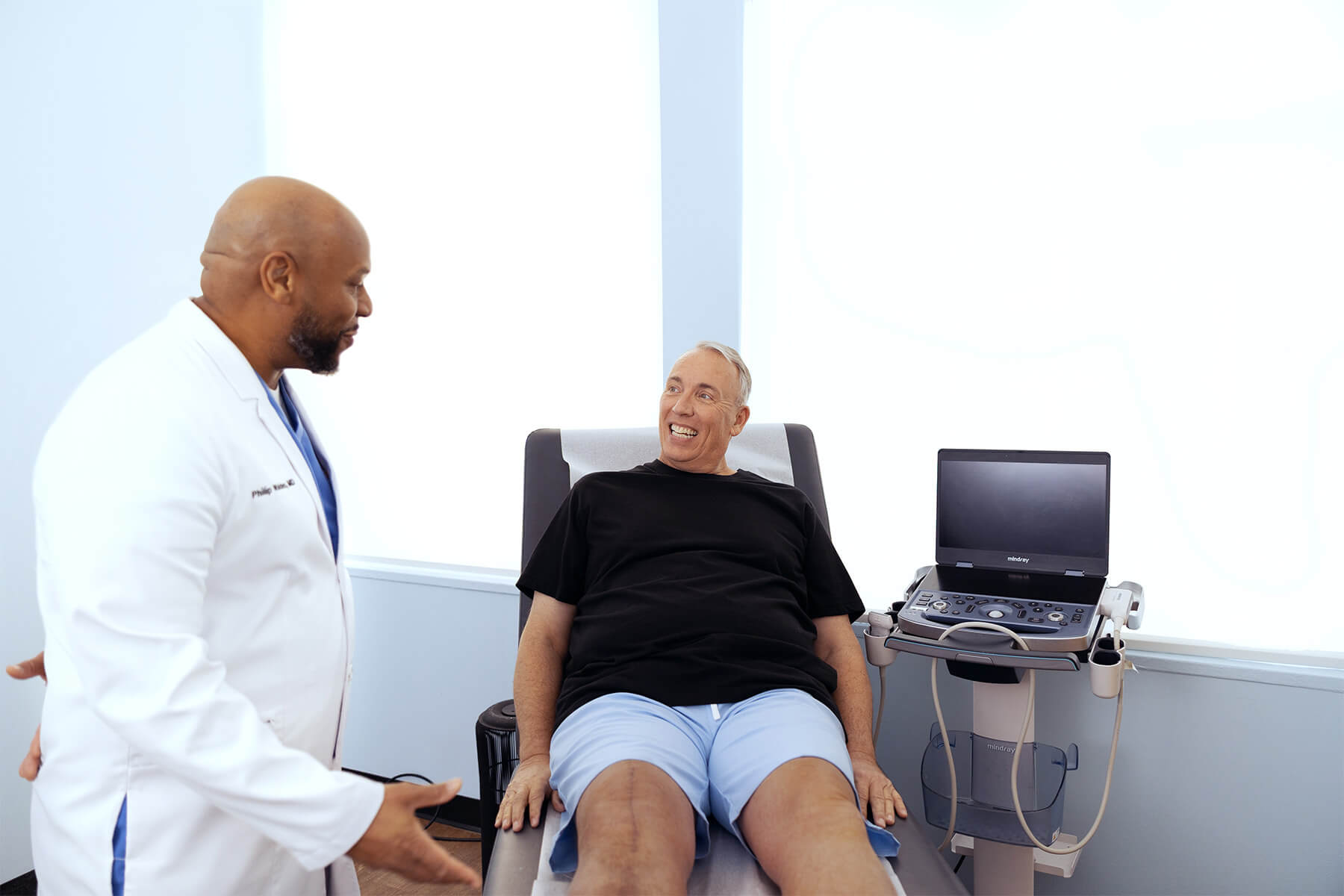
A vein evaluation is non-invasive, is often free or covered by insurance, and takes under an hour. Catching venous insufficiency early makes it much easier to manage, ensuring you stay active for many vacations to come.
Explore More, Ache Less
Yes, it’s possible to enjoy traveling while protecting your veins. By choosing the right compression socks and practicing lifestyle habits that support healthy circulation, you can arrive at your destination feeling refreshed and ready to explore.
Ready to travel with confidence? Schedule your free vein screening today.
Frequently Asked Questions About Compression Socks for Travel
For most travelers, compression socks with 20–30 mmHg are the ideal balance of effective pressure and comfort for long-haul flights.
Yes, compression stockings are recommended for short flights. While not always necessary for flights under two hours, they can still prevent the minor swelling and fatigue often caused by cabin pressure.
Yes. Wearing compression stockings on a plane is one of the most effective ways to manage swelling and the risk of DVT caused by sitting in confined spaces.
You should wear compression socks for the entire duration of your travel, from the time you head to the airport until you arrive at your hotel or home.
Yes, compression socks can help prevent leg swelling on long flights. By supporting the vein walls and assisting blood flow, they are clinically proven to minimize or even eliminate travel-related edema (swelling) and blood clots.

Dr. Hugh Pabarue
Meet Dr. Hugh Pabarue, a board-certified physician and vein specialist with over 15 years of experience in Metro Detroit. Schedule an appointment with him in Macomb & St. Clair Shores today.
Meet Dr. Hugh Pabarue
Trusted insight from the nationally accredited, board-certified vein doctors at Metro Vein Centers.