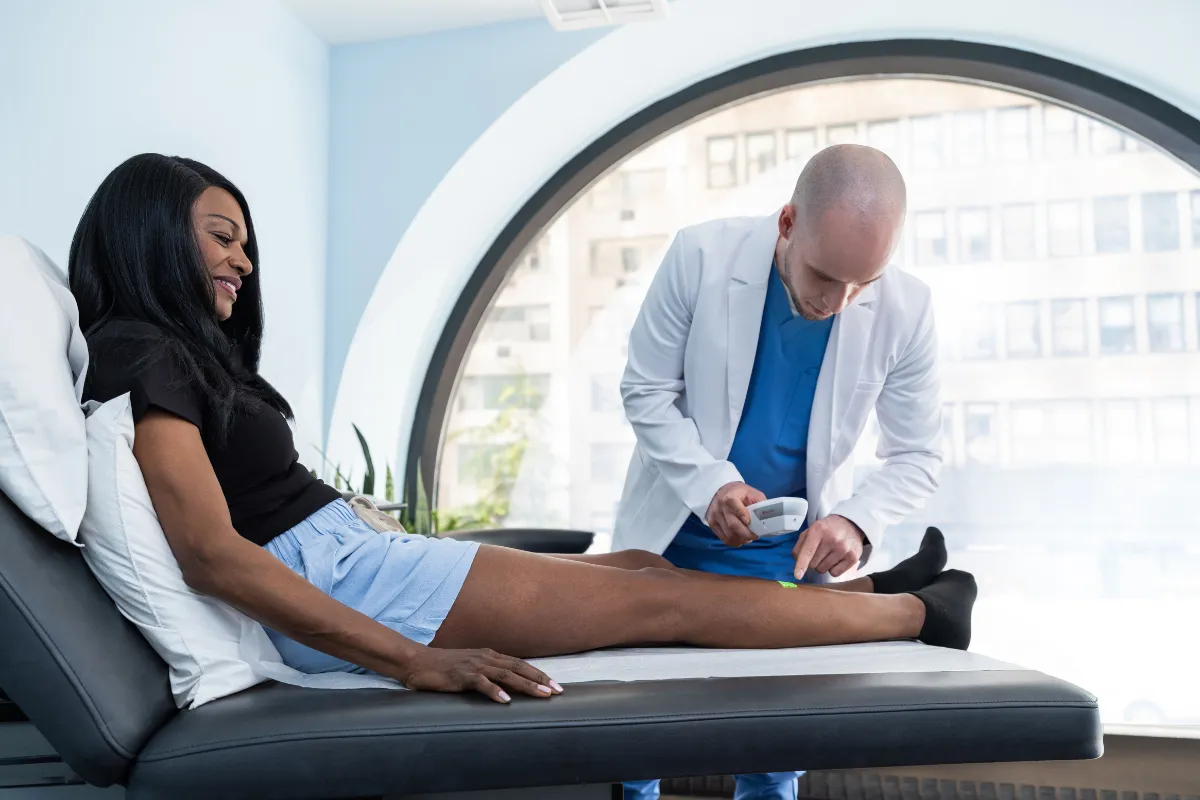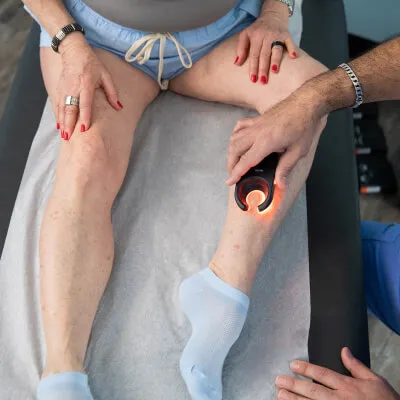

If you have Postural Orthostatic Tachycardia Syndrome (POTS) and also struggle with leg swelling, varicose veins, or pelvic pain, you're not imagining the connection. Research reveals a strong connection between POTS and chronic venous insufficiency (CVI)—and treating the vein problems may actually improve POTS symptoms.
Key Stats on POTS and CVI
- POTS affects about 1 to 3 million people in the United States.
- Most POTS patients have venous insufficiency in their lower extremities
- 69% of POTS patients have significant pelvic vein compression (vs 40% of the general population).
- 85% of POTS patients are female (the same group most likely to experience vein health issues).
What is Postural Orthostatic Tachycardia Syndrome (POTS)?
POTS is a form of dysautonomia, a disorder of the autonomic nervous system—that causes an abnormally large increase in heart rate when a person stands up.
While most people’s bodies automatically adjust to gravity when standing, for those with POTS, the automatic signals get crossed. Currently, it is estimated that between 1 and 3 million Americans live with POTS, and that number has grown significantly in recent years.
Common Symptoms of POTS
- Extreme lightheadedness or fainting upon standing
- Rapid heart palpitations (tachycardia)
- Brain fog and fatigue
- Exercise intolerance
- Purple or mottled skin on the legs when standing
The POTS Subtypes
While POTS presents differently in each person, it is usually categorized into three subtypes. The hypovolemic type is the most closely linked to vein health:
- Hypovolemic POTS: Characterized by low blood volume.
- Neuropathic POTS: Linked to nerve damage that prevents leg muscles from constricting the veins.
- Hyperadrenergic POTS: Driven by high levels of stress hormones (adrenaline).
Understanding Chronic Venous Insufficiency (CVI)
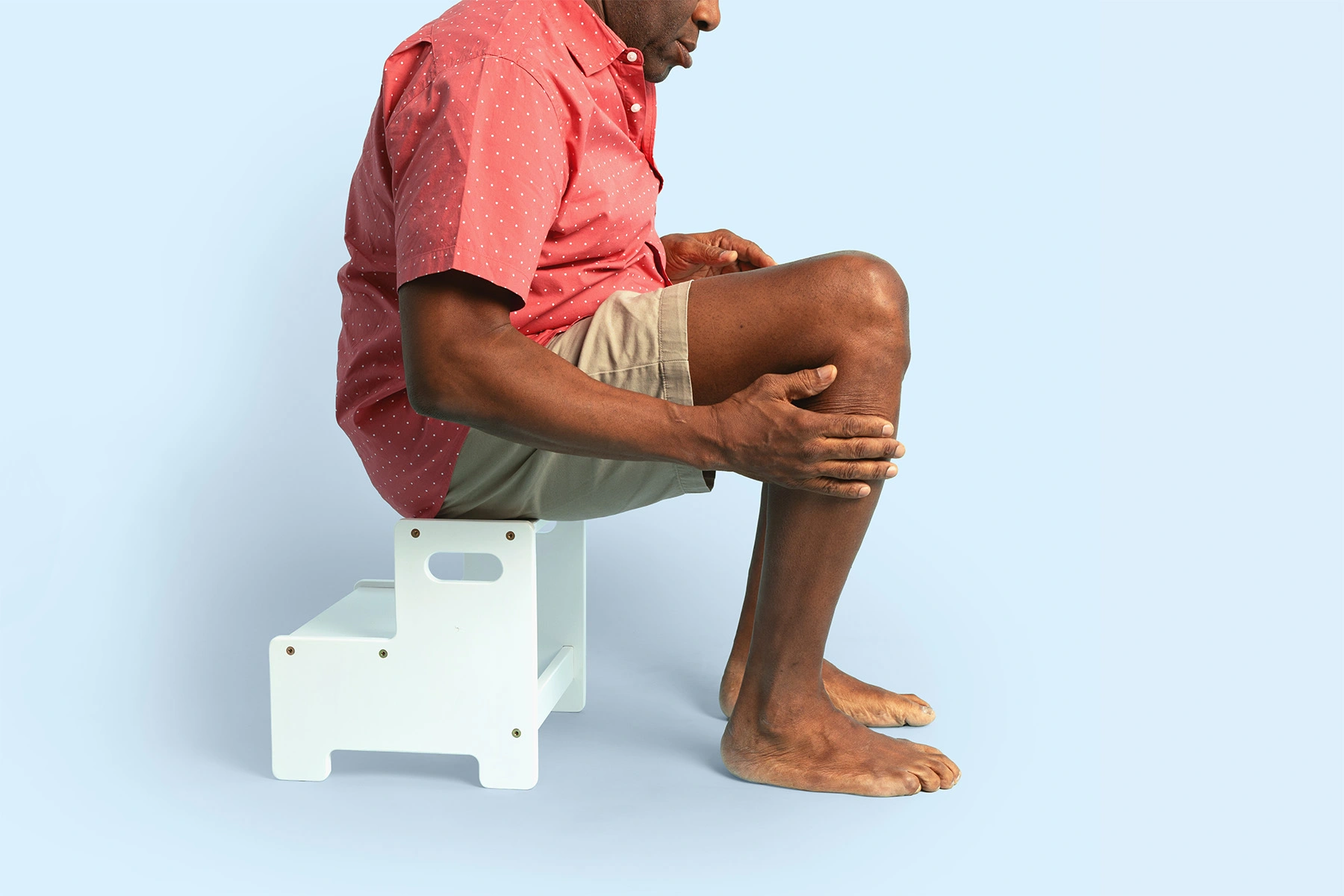
Chronic Venous Insufficiency (CVI) occurs when the tiny valves in your leg veins become weak or damaged, allowing blood to flow backward and pool in the lower legs.
CVI is incredibly prevalent, affecting millions of adults. It develops when the high pressure in the leg veins causes valves to fail, leading to symptoms like:
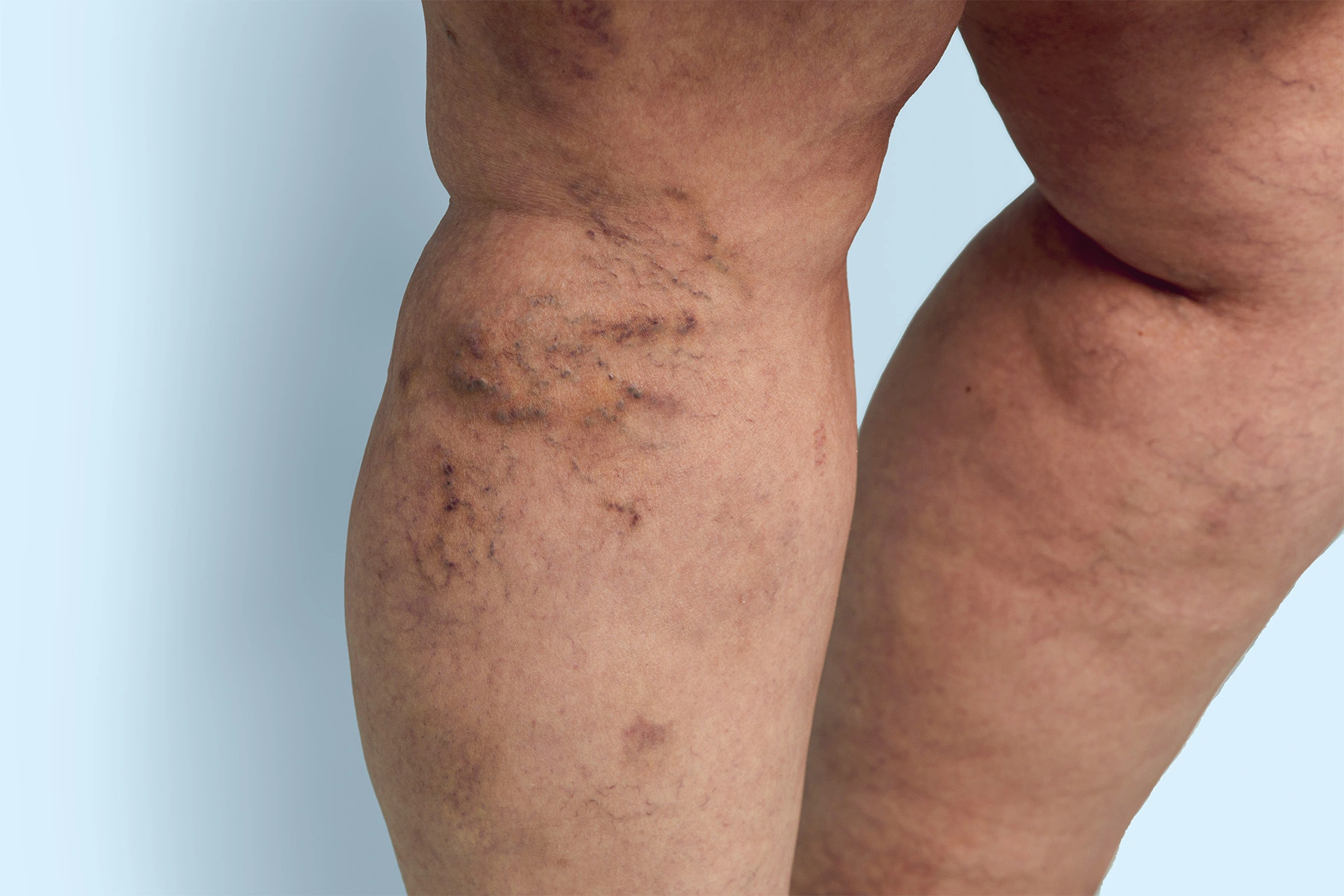
- Visible varicose veins or spider veins
- Leg swelling and cramping
- Aching and heavy legs
- Restless legs
- Skin changes and discoloration
Is there a connection between POTS and CVI?
Yes. The connection is rooted in venous pooling. Because most POTS patients have CVI, the blood that should be returning to the heart instead gets stuck in the legs, triggering the heart to race to compensate for the lack of circulating blood.
The Connection Between POTS and CVI: What the Research Reveals
Nerves control the constriction and dilation of blood vessels, including veins. With the dysautonomia associated with POTS, there is a disruption in the body's ability to control the constriction, leaving the veins dilated. Over time, this leads to chronic venous insufficiency in the legs and pelvic congestion.
Recent clinical studies have further clarified how these overlapping conditions can impact our health. Here is what the science tells us:
- Research has found that most POTS patients also have venous insufficiency in their lower extremities. This suggests that for many, POTS isn't just a nervous system problem, it’s a circulation problem.
- 69% of POTS patients show significant pelvic vein compression (such as May-Thurner Syndrome). This blockage creates a bottleneck, forcing blood to pool in the pelvis and legs.
- Case studies have shown that when POTS patients who didn't respond to standard POTS medications received vein treatments, their POTS symptoms significantly improved.
- Treating pelvic venous insufficiency has been shown to help systemic POTS symptoms, including reducing the frequency of fainting and tachycardia.
Why is there a connection?
It all comes down to how your body manages gravity and circulation. When your veins struggle to return blood to your heart, your nervous system has to work overtime to keep everything moving, and that’s where the overlapping symptoms begin.
Let’s break it down:
- Venous Pooling - when vein valves fail, gravity wins. Blood stays in the legs, leaving the brain and heart "thirsty" for oxygenated blood.
- The Triple Connection - many patients have a triple diagnosis of POTS, CVI, and Ehlers-Danlos Syndrome (EDS). Connective tissue disorders make vein walls "stretchy," leading to easier valve failure.
- The Vicious Cycle - POTS causes exercise intolerance → Reduced activity leads to muscle weakness → The calf muscle pump (which pushes blood up) gets weaker → More blood pools → POTS symptoms get worse.
Self-Assessment: Could You Have Both?
Many POTS patients assume all their discomfort is "just POTS." Use this checklist to see if your veins might also be playing a role:
Leg & Pelvic Symptoms:
- Visible varicose or spider veins.
- Heavy, tired, aching legs that feel better when elevated.
- Purple/mottled skin on legs when standing.
- Chronic pelvic pain or heaviness.
- Swelling that improves overnight but returns during the day.
Impact on Daily Life:
- Can't stand in the shower without extreme fatigue.
- Compression stockings significantly reduce your heart rate.
- Grocery shopping or standing to cook feels impossible.
Scoring:
4–8 checks: Moderate likelihood—consider a vein health evaluation.
9+ checks: High likelihood—vein treatment may significantly help your quality of life.
Treatment and Management Options
The best approach to managing both POTS and CVI is an integrated approach that includes both lifestyle changes and medically approved treatments.
Lifestyle & At-Home Care
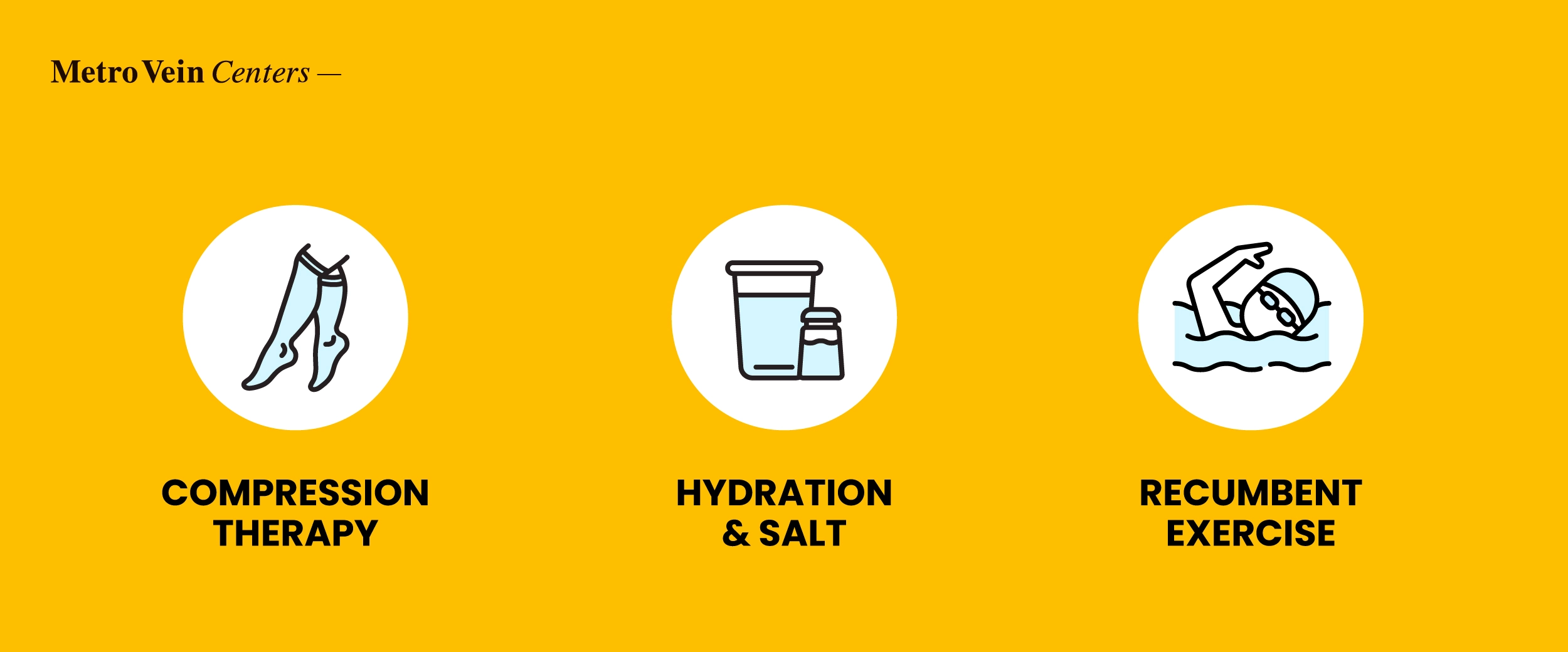
- Compression Therapy - medical-grade stockings help prevent blood from pooling in the legs, supporting both your veins and your heart rate.
- Hydration & Salt -increasing fluid and salt intake (under medical supervision) can help expand blood volume.
- Recumbent Exercise - recumbent means you are exercising in a semi-reclined seated position. Rowing or swimming are excellent choices as they build leg strength without the stress of gravity while standing.
Minimally Invasive Vein Treatments
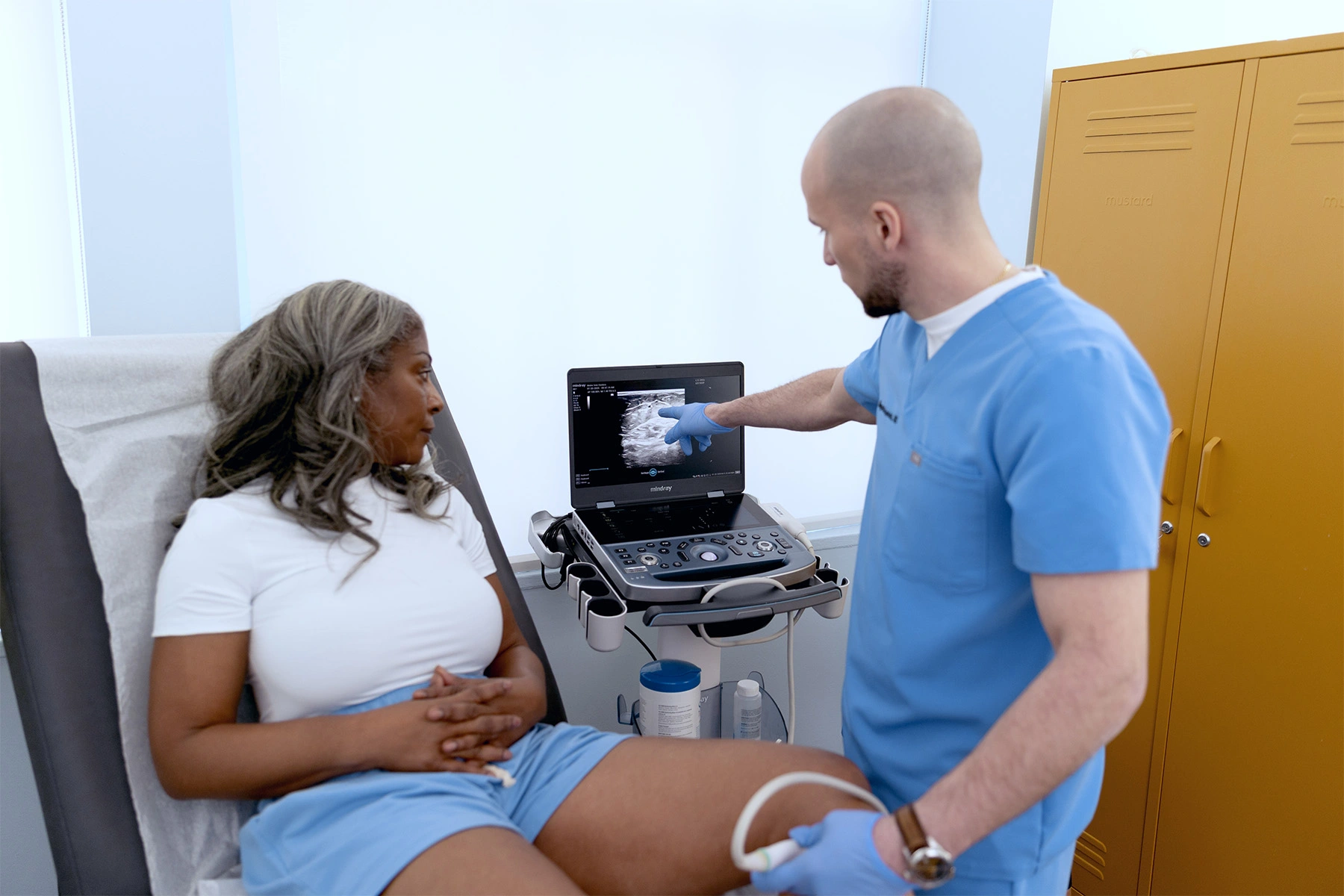
If CVI is diagnosed, minimally invasive treatments can permanently close the damaged veins, rerouting blood to healthy ones. The following are effective in-office procedures that require little to no downtime:
- Radiofrequency (RFA) or Laser Ablation (EVLA)
- Sclerotherapy for smaller veins
- VenaSeal™ or Varithena® (medical adhesives/foams)
Taking the Next Steps
Ready to explore whether venous insufficiency might be contributing to your POTS symptoms? You don’t have to manage this alone. At Metro Vein Centers, our board-certified specialists understand the POTS-vein connection and can assess whether targeted vein treatment might help you find the relief you've been looking for. Book your free consultation today.
References
Cleveland Clinic: Postural Orthostatic Tachycardia Syndrome (POTS).
Mayo Clinic: Ehlers-Danlos syndrome.
NIH: Radiofrequency venous ablation for symptomatic relief in postural orthostatic tachycardia syndrome: a case series.
NIH: Imaging findings of pelvic venous insufficiency in patients with postural orthostatic tachycardia syndrome.
NIH: Symptom Presentation and Access to Medical Care in Patients With Postural Orthostatic Tachycardia Syndrome: Role of Sex.
Frequently Asked Questions
Yes. For many patients, closing off leaky veins reduces the total amount of blood pooling in the legs. This makes it easier for your body to maintain blood pressure and can lower your resting heart rate.
In regular POTS, the veins might be structurally okay, but aren't being told to constrict by the nerves. In CVI, the valves inside the veins are structurally compromised.
EDS affects collagen, which is the "glue" that keeps your veins firm. If you have EDS, your veins are more likely to stretch and develop CVI, which in turn worsens POTS.
Yes, compression therapy is the "gold standard" for both conditions. It manually pushes blood upward, helping the damaged valves and keeping more blood available for your heart and brain.
Dr. Hugh Pabarue
Meet Dr. Hugh Pabarue, a board-certified physician and vein specialist with over 15 years of experience in Metro Detroit. Schedule an appointment with him in Macomb & St. Clair Shores today.
Meet Dr. Hugh Pabarue
Trusted insight from the nationally accredited, board-certified vein doctors at Metro Vein Centers.