If you have noticeable spider veins or varicose veins, you might think of them as merely a cosmetic annoyance. But based on our data, many people with these common vein health conditions are living with chronic pain and discomfort when they don’t need to be. We collected responses from over 85,000 online vein health self-assessments between November 2022 and October 2026, and our findings may surprise you.
Many experience heavy, aching legs for months or years before realizing their symptoms stem from chronic venous insufficiency (CVI), a common vein disease affecting leg circulation. Here is a closer look at what our 2026 vein health self-assessment data tells us about how common vein symptoms are, who they affect, and why getting your legs evaluated by a vein specialist is about so much more than appearance.
Key Findings at a Glance
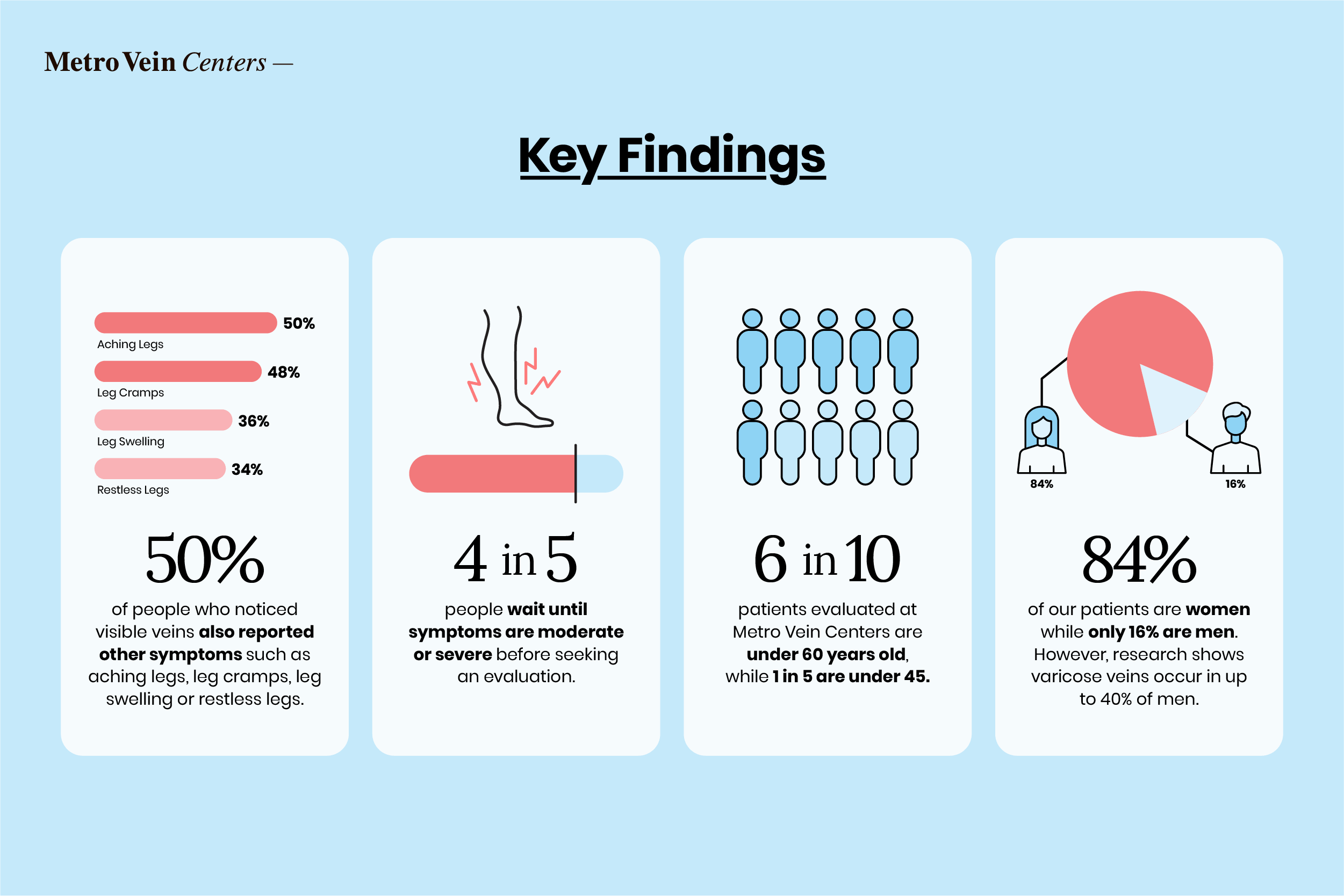
- Spider and varicose veins are rarely just skin deep. About half of the people who completed our online self-assessment who noticed visible veins also reported aching legs (50%) and leg cramps (48%). Around 1 in 3 experienced leg swelling (36%) or restless legs (34%).
- More than 4 in 5 people wait until symptoms are moderate or severe before seeking an evaluation. In our self-assessment data, 68% rated their symptoms as moderate, and 15% rated them as severe.
- Vein disease isn’t just an older person’s problem. 6 in 10 patients evaluated at Metro Vein Centers are under 60 years old, and 1 in 5 is under 45.
- Women seek care most often, but men may be going undiagnosed. Women represent 84% of our clinic patients versus 16% men. However, population research shows varicose veins occur in up to 40% of men, suggesting men are less likely to seek an evaluation even when symptoms are present.
A Note About the Data
- The statistics in this report draw on data collected from 85,875 online self-assessments (65,429 in English and 20,446 in Spanish) completed between November 2022 and October 2026*.
- Information on patient demographics comes from the records of 184,282 Metro Vein Centers’ patients.
- Answers are self-reported by people who chose to take the assessment. They aren't diagnosed and don't represent the general population.
- People could choose more than one answer, percentages are rounded, and all figures are aggregate.
*Metro Vein Centers Vein Health Insights Report (2026). Aggregate data from 85,875 self-assessments and 184,282 patient records (Nov 2022 – Oct 2026). Last Updated: November 2026
Are Spider and Varicose Veins Just Cosmetic?
It is a common misconception that spider veins and varicose veins are purely about appearance. In reality, visible veins are often outward signals of an underlying circulatory issue called venous insufficiency, where tiny valves inside your leg veins struggle to pump blood back up toward your heart.
Here’s what the data shows:
- Of people with spider veins, 60% also report varicose veins, 51% report aching legs, 48% report leg cramps, and 36% report pain when standing.
- Of the people with varicose veins, 78% also report spider veins, 53% report aching legs, 51% report leg cramps and 40% report leg swelling.
Spider Veins Often Appear Alongside Varicose Veins
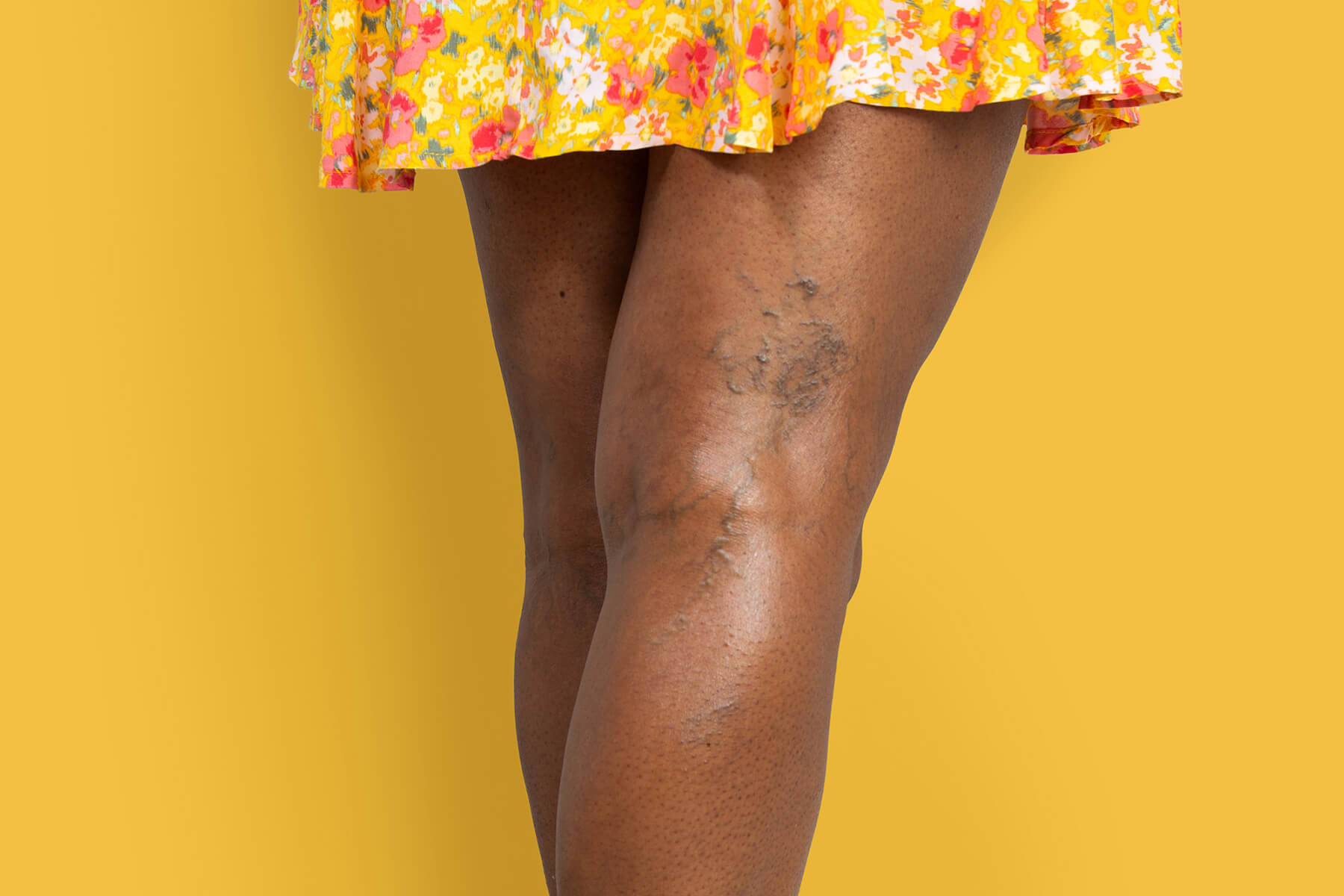
Spider veins and varicose veins frequently go hand in hand. If you have noticed delicate red or blue spider veins just below the surface of the skin, there is a strong chance that deeper vein changes are present too. You can learn more about how these two conditions differ in our guide to spider veins vs. varicose veins.
Both Often Come With Symptoms You Can Feel
When vein valves leak, pressure builds up in the tissue. That is why visible veins often come with physical symptoms like heaviness, throbbing, or fatigue by the end of the day.
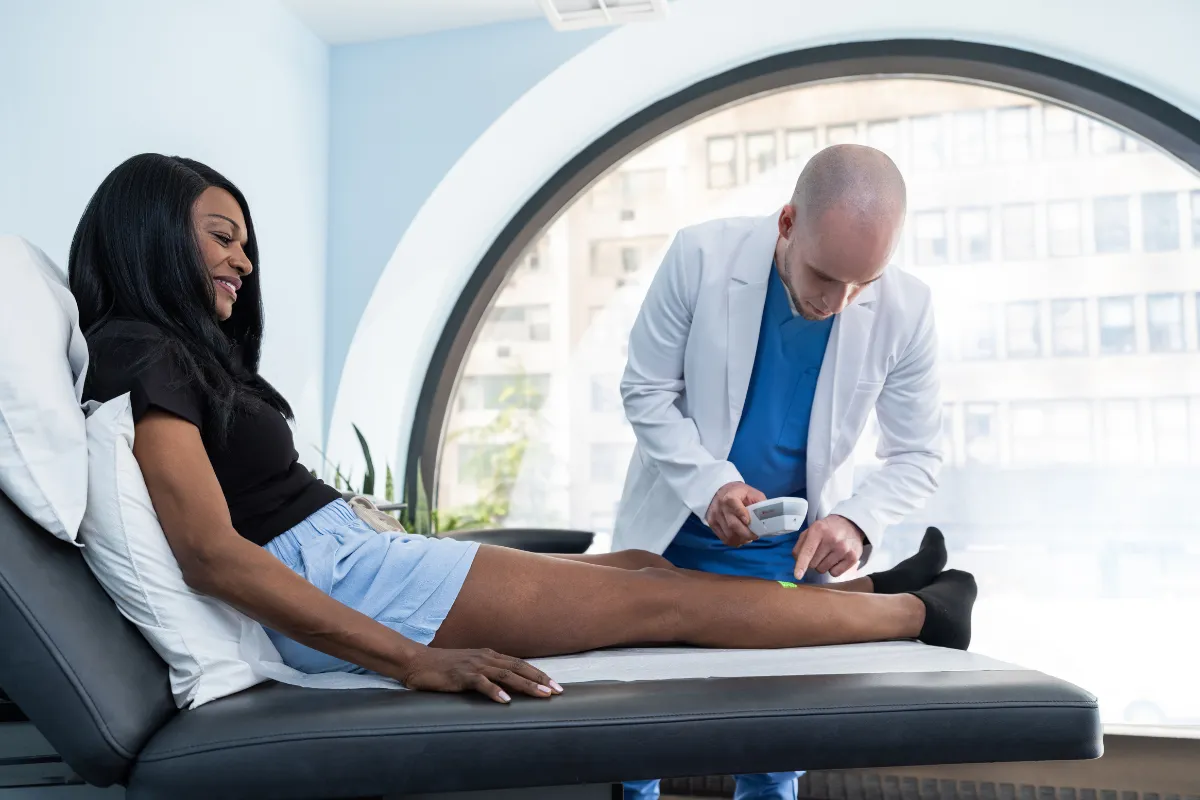
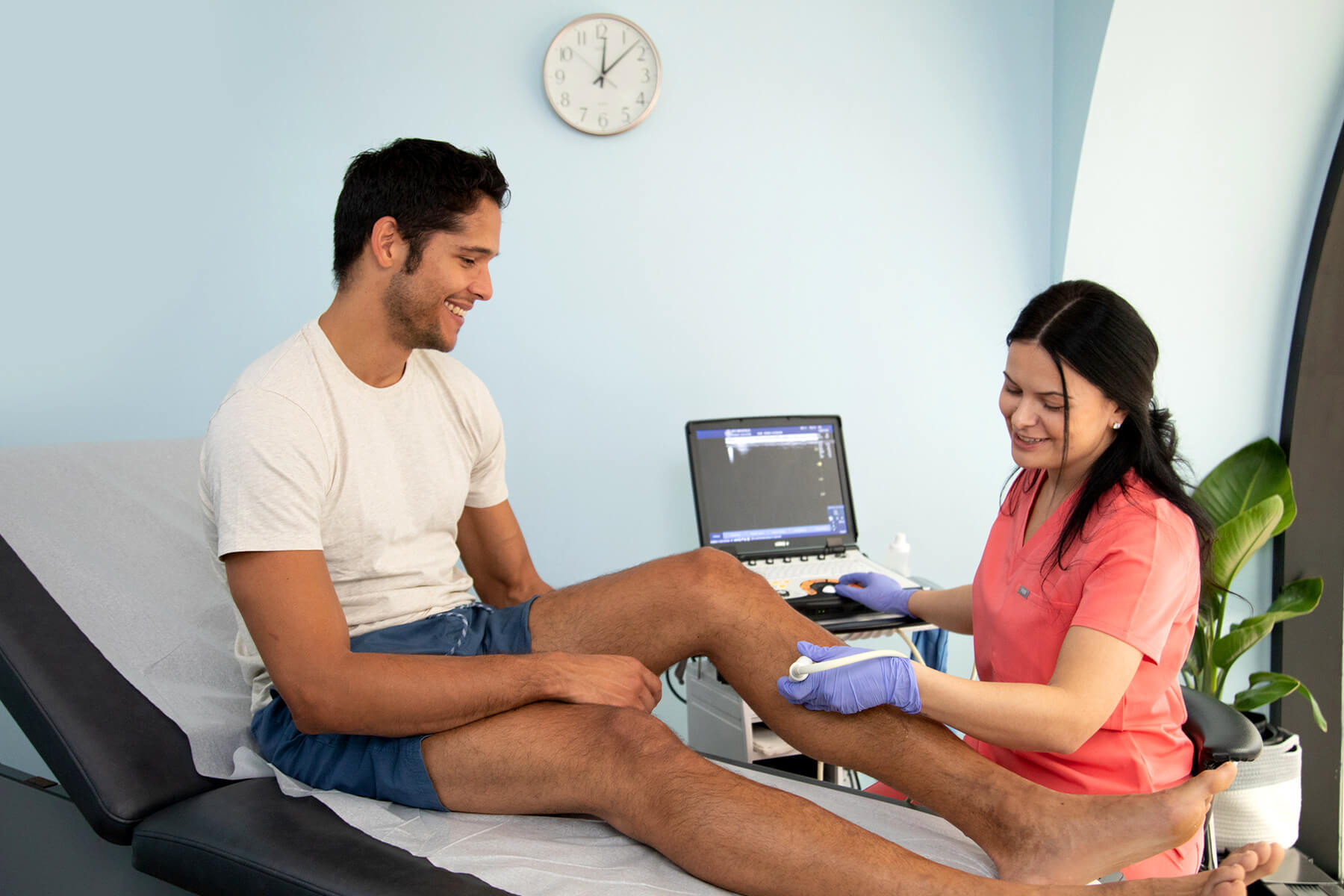
A vein evaluation with a duplex ultrasound can show what's happening beneath the skin. This simple, non-invasive test can be performed by a vascular ultrasound technologist and reviewed by a vein specialist to determine whether your symptoms are caused by an underlying circulatory issue known as venous insufficiency.
What Are The Most Common Vein Symptoms?
While surface veins are often what catch people's attention first, physical discomfort follows closely behind. Your body uses these signs to let you know your vein health could use some support.
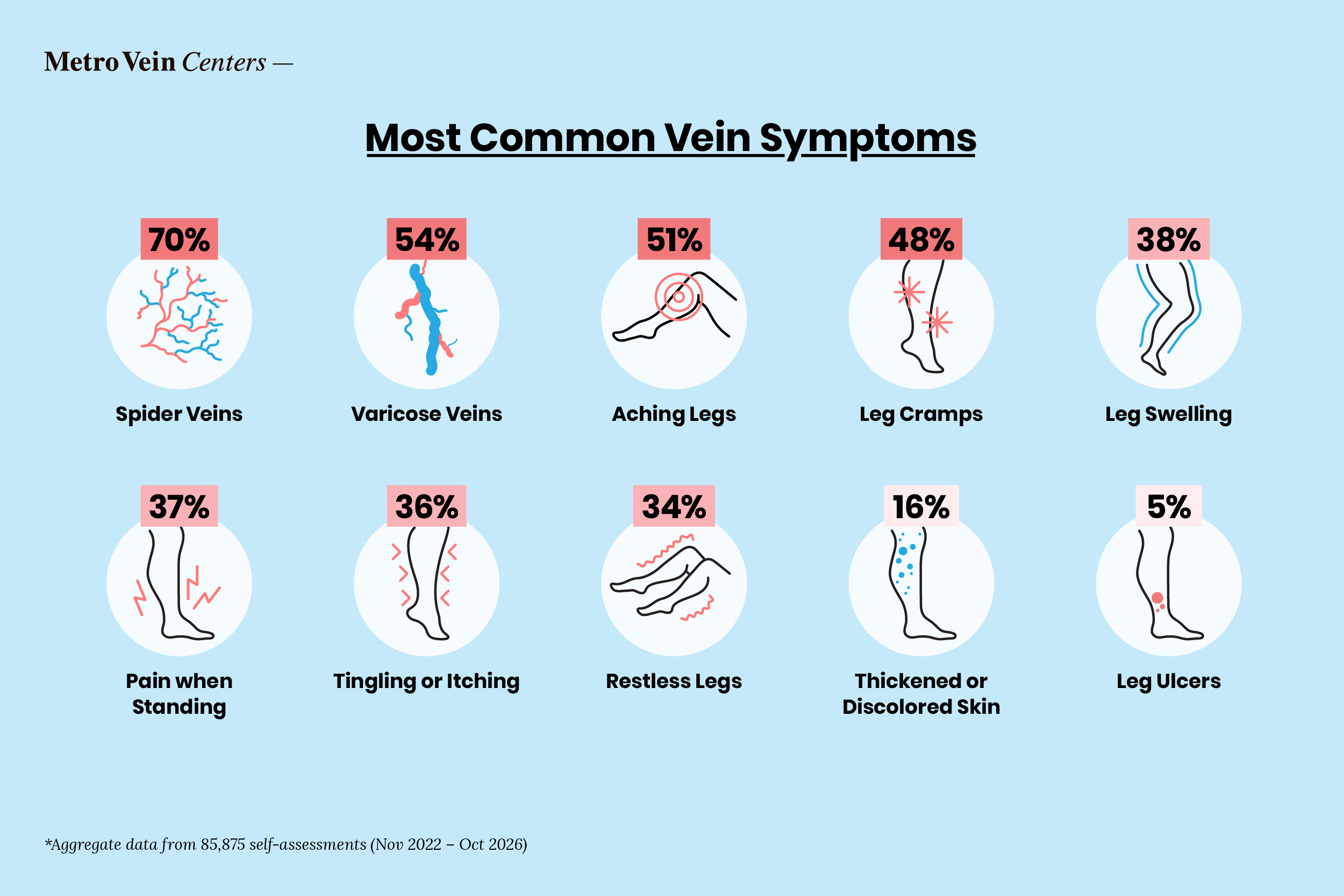
Here are the symptoms reported by self-assessment takers, ranked from most to least common:
- Spider veins (70%): A sign of increased pressure in tiny surface capillaries.
- Varicose veins (54%): A sign of stretched, enlarged veins caused by pooling blood.
- Aching legs (51%): A sign of increased fluid build-up and pressure in leg tissues.
- Leg cramps (48%): A sign of poor circulation and fluid pooling triggering muscle spasms.
- Leg swelling (38%): A sign of fluid leaking into surrounding tissue due to sluggish drainage.
- Pain when standing (37%): A sign of gravity pulling blood downward against weak vein valves.
- Tingling or itching (36%): A sign of mild skin inflammation from trapped blood components.
- Restless legs (34%): A sign of circulatory irritation affecting nerve sensation in the lower legs.
- Thickened or discolored skin (16%): A sign of advanced tissue inflammation from chronic blood pooling.
- Leg ulcers (5%): A sign of severe, long-standing pressure breaking down skin tissue.
Most People Wait Until Symptoms Are Moderate or Severe
It’s understandable why you might put off a medical evaluation when life gets busy. However, our data shows that the vast majority of people wait until their symptoms start to have a significant impact on their daily life before reaching out for support:
- 68% rate their overall symptoms as moderate
- 15% rate their symptoms as severe
When we break down specific symptoms, pain when standing is rated severe most often (39%), followed closely by aching legs (34%).
Additionally, 16% of self-assessment takers already experience skin discoloration and 5% report leg ulcers—both signatures of more advanced vein disease.
Because vein issues tend to progress over time, catching them early gives you the advantage of more treatment options. Read more about the importance of early detection and treatment of vein disease to see why starting early matters.
Top Priorities: Vein Health Over Appearance
When people take our online self-assessment, we ask what matters most to them. While cosmetic concerns are important, physical health and peace of mind consistently rank at the top:
- Rule out a serious health issue: 70%
- Feel better physically: 61%
- Feel confident about how legs look: 53%
- Be proactive about personal health: 39%
- Learn more about vein health: 20%
Even though spider veins are the single most common concern, people's primary goal is their overall health and feeling good.
Who Gets Vein Disease?
The short answer? Anyone can. While genetics, lifestyle factors, and pregnancy play roles, vein disease isn’t limited to just one profile.
Women Seek Care Most, but Men May Go Undiagnosed
At Metro Vein Centers, 84% of our clinic patients are women. Only 16% of our patients are men. Does this mean men rarely get vein disease? Not at all. Landmark medical research like the Edinburgh Vein Study revealed that varicose veins actually affect 40% of men.
When men do step into our clinics, they tend to be older—their average age is 60 (compared to 55 for women), and 15% are 75 or older (compared to just 8% of women). This gap suggests that men aren't immune to vein issues; instead, they are just less likely to get their legs evaluated until symptoms become difficult to ignore.
Explore more about men and varicose veins and leg vein health in women.

It Starts Earlier Than Most People Think
It is a common misconception that vein care is strictly for seniors. Our clinical records show a very different picture:
- 6 in 10 patients are under 60 years old
- 1 in 5 patients is under 45 years old
Here is how our patient population breaks down by age:
- Under 30: 1%
- 30–44: 20%
- 45–59: 39%
- 60–74: 31%
- 75 and older: 9%
Vein disease routinely affects working-age adults who spend long hours on their feet, balancing careers, families, and active lives.

How These Findings Compare With Published Research
Our data revealed that 54% of self-assessment takers report varicose veins, compared with 14% to 40% in population studies. Why the difference? People who choose to take an online vein health assessment are usually already noticing changes in their legs, so our numbers run higher than those from random population samples.
Here is how our findings compare with some major published studies:
San Diego Population Study (United States): Examined 2,211 men and women from diverse ethnic backgrounds and found that spider veins and varicose veins were more common in women and that vein disease became more common with age. What doctors could see on the legs matched what a duplex ultrasound showed in 92% of legs.
Edinburgh Vein Study (UK): Tracked adults aged 18–64 and found varicose veins in 40% of men and 32% of women, with chronic venous insufficiency in 9% of men and 7% of women. Unlike most earlier studies, it found mild varicose veins were more common in men than in women.
Bonn Vein Study (Germany): Found that 59% of the general population had spider or reticular veins, and 14% had varicose veins.
Vein Consult Program (International): Among more than 91,000 adults seen by primary care doctors worldwide, 84% had signs or symptoms of chronic venous disease, a reminder of how often vein disease shows up when people are asked.
Our data lines up with published research: vein disease is common, and visible veins often come with symptoms people can feel.
The Bottom Line: Vein Disease Deserves a Closer Look
The biggest take-away from the 85,000+ online self-assessments we’ve collected is that vein disease is more than a cosmetic concern. Based on the trends we see, here are some vein health tips to keep in mind:
- Listen to your body: Do your legs ache, cramp, or swell at the end of a long day? Do they feel better when you elevate them or put on compression socks? These are gentle signals that your circulatory system could use some help.
- Don't wait for severe symptoms: Over 80% of people wait until discomfort is moderate or severe before reaching out. Getting checked early helps protect your vein health and keeps your treatment options simple and minimally invasive.
- Men and younger adults matter too: No matter your age or gender, if you’re experiencing heavy, achy legs, you are not alone—and you don't have to just "tough it out."
- Insurance often covers care: Because symptomatic vein disease is a recognized medical condition, treatments that are considered medically necessary are often covered by major health insurance plans and Medicare. Learn more about vein treatments covered by insurance.
Taking care of your legs means protecting your mobility, comfort, and daily energy. If you are wondering about your own leg health, you can take our quick online vein health assessment or schedule a free vein evaluation with one of our specialists today.
Frequently Asked Questions
In our self-assessment data, spider veins were the most common visual sign (70%), while aching legs (51%) and leg cramps (48%) were the most common physical symptoms people felt.
Not always, but they often appear alongside underlying circulation changes. In our data, 60% of people with spider veins also report varicose veins, and over half reported aching legs.
Very common! About 54% of our self-assessment takers reported varicose veins. Population studies like the Edinburgh Vein Study show they affect up to 40% of men and 32% of women.
Yes. Vein disease is not exclusive to older adults. In our clinic records, 20% of patients are between ages 30 and 44, and 60% are under age 60.
The statistics in this report come from 85,875 online self-assessments completed between November 2022 and October 2026, alongside clinical records from 184,282 Metro Vein Centers patients.
References
Metro Vein Centers Internal Data: Vein health self-assessment results (Nov 2022 – Oct 2026, 85,875 assessments) and clinical patient demographics (184,282 patients). Aggregate figures only.
Brand FN, Dannenberg AL, Abbott RD, Kannel WB. The epidemiology of varicose veins: the Framingham Study. Am J Prev Med. 1988;4(2):96–101.
Criqui MH, Jamosmos M, Fronek A, et al. Chronic venous disease in an ethnically diverse population: the San Diego Population Study. Am J Epidemiol. 2003;158(5):448–456.
Evans CJ, Fowkes FGR, Ruckley CV, Lee AJ. Prevalence of varicose veins and chronic venous insufficiency in men and women in the general population: Edinburgh Vein Study. J Epidemiol Community Health. 1999;53(3):149–153.
Rabe E, Guex JJ, Puskas A, et al. Epidemiology of chronic venous disorders in geographically diverse populations: results from the Vein Consult Program. Int Angiol. 2012;31(2):105–115.
Rabe E, Pannier-Fischer F, Bromen K, et al. Bonner Venenstudie der Deutschen Gesellschaft für Phlebologie. Phlebologie. 2003;32:1–14.

Dr. Philip LoPresti
Meet Dr. Philip LoPresti, DABVLM, FACS, a board-certified surgeon and vein specialist and surgeon with over 20 years of experience. Schedule an appointment with him in Queens, NY today.
Meet Dr. Philip LoPresti
Trusted insight from the nationally accredited, board-certified vein doctors at Metro Vein Centers.